

Lecture Series
DEAGENCY team has been inviting a number of experts from diverse scholarly disciplines to give lectures on chosen topics related to the project research. The lectures are held at the Department of Ethnology and Cultural Anthropology, at the Faculty of Arts, University of Ljubljana, Slovenia, other institutions and online.

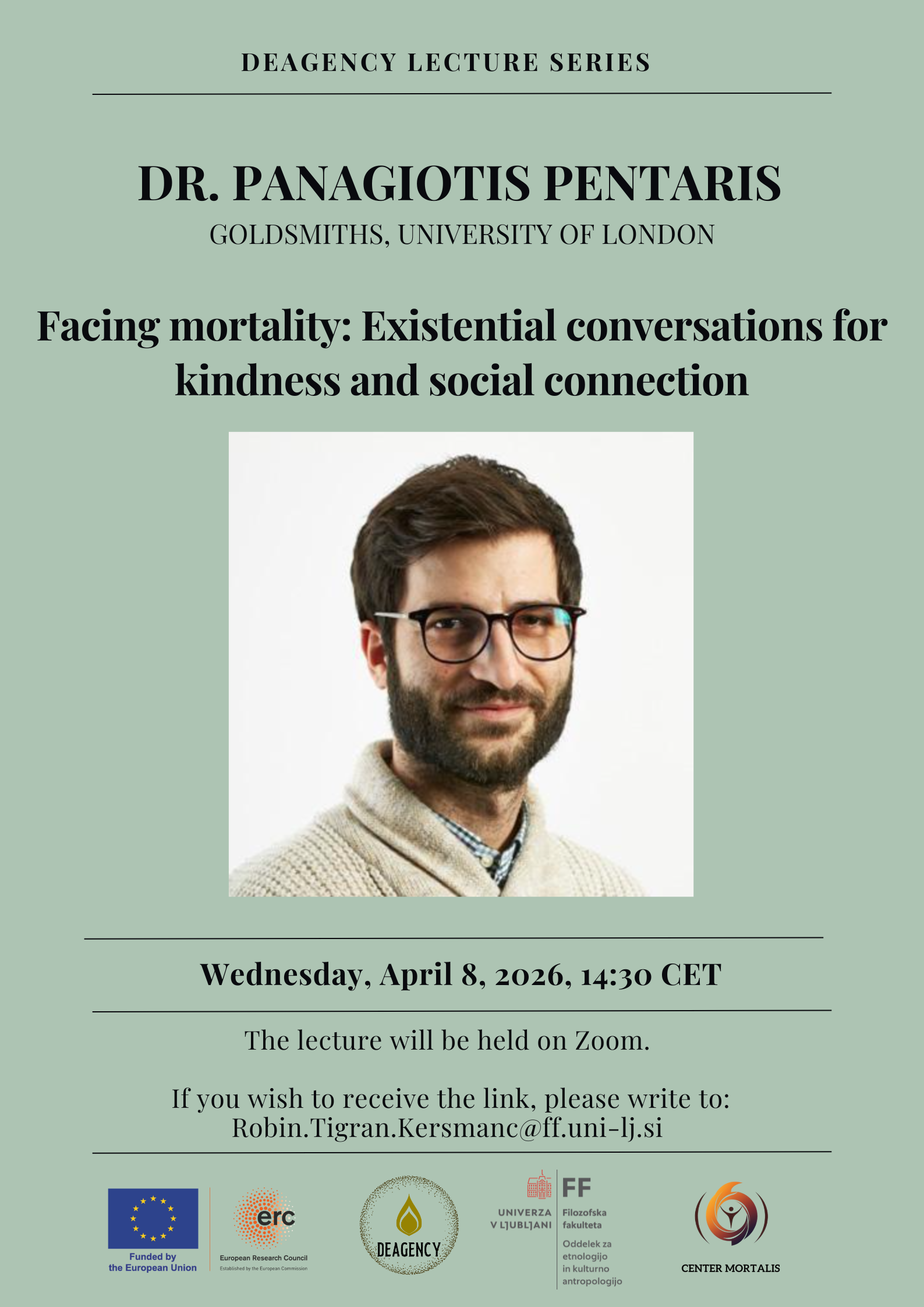
Panagiotis Pentaris , PhD
ERC project DEAGENCY (No 101095729) at the Department of Ethnology and Cultural Anthropology, Faculty of Arts, University of Ljubljana, Slovenia
DEAGENCY Lecture Series 21:
Facing mortality: Existential conversations for kindness and social connection
April 8, 2026
Online Lecture
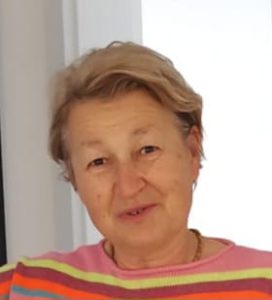
Klelija Štrancar, PhD
ERC project DEAGENCY (No 101095729) at the Department of Ethnology and Cultural Anthropology, Faculty of Arts, University of Ljubljana, Slovenia
DEAGENCY Lecture Series 20:
Palliative approach in times of severe incurable illness
February 25, 2026
Blue Room, Faculty of Arts, Aškerčeva 5, 1000 Ljubljana

Simona K. Zupanc
ERC project DEAGENCY (No 101095729) at the Department of Ethnology and Cultural Anthropology, Faculty of Arts, University of Ljubljana, Slovenia
DEAGENCY Lecture Series 19:
Encounters with the Dead in Rural Northeastern Slovenia
December 1, 2026
Department of Ethnology and Cultural Anthropology, Zavetiška 5 , Lecture room P3, Ljubljana

Tina Ivnik, PhD
ERC project DEAGENCY (No 101095729) at the Department of Ethnology and Cultural Anthropology, Faculty of Arts, University of Ljubljana, Slovenia
DEAGENCY Lecture Series 18:
Conceptualization of the Afterlife and the Influence of the Dead among Spiritual Individuals in Bosnia and Herzegovina
December 15, 2025
Department of Ethnology and Cultural Anthropology, Zavetiška 5 , Lecture room P3, Ljubljana
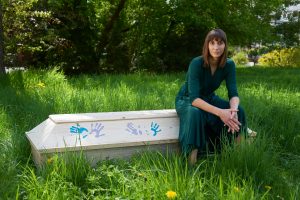
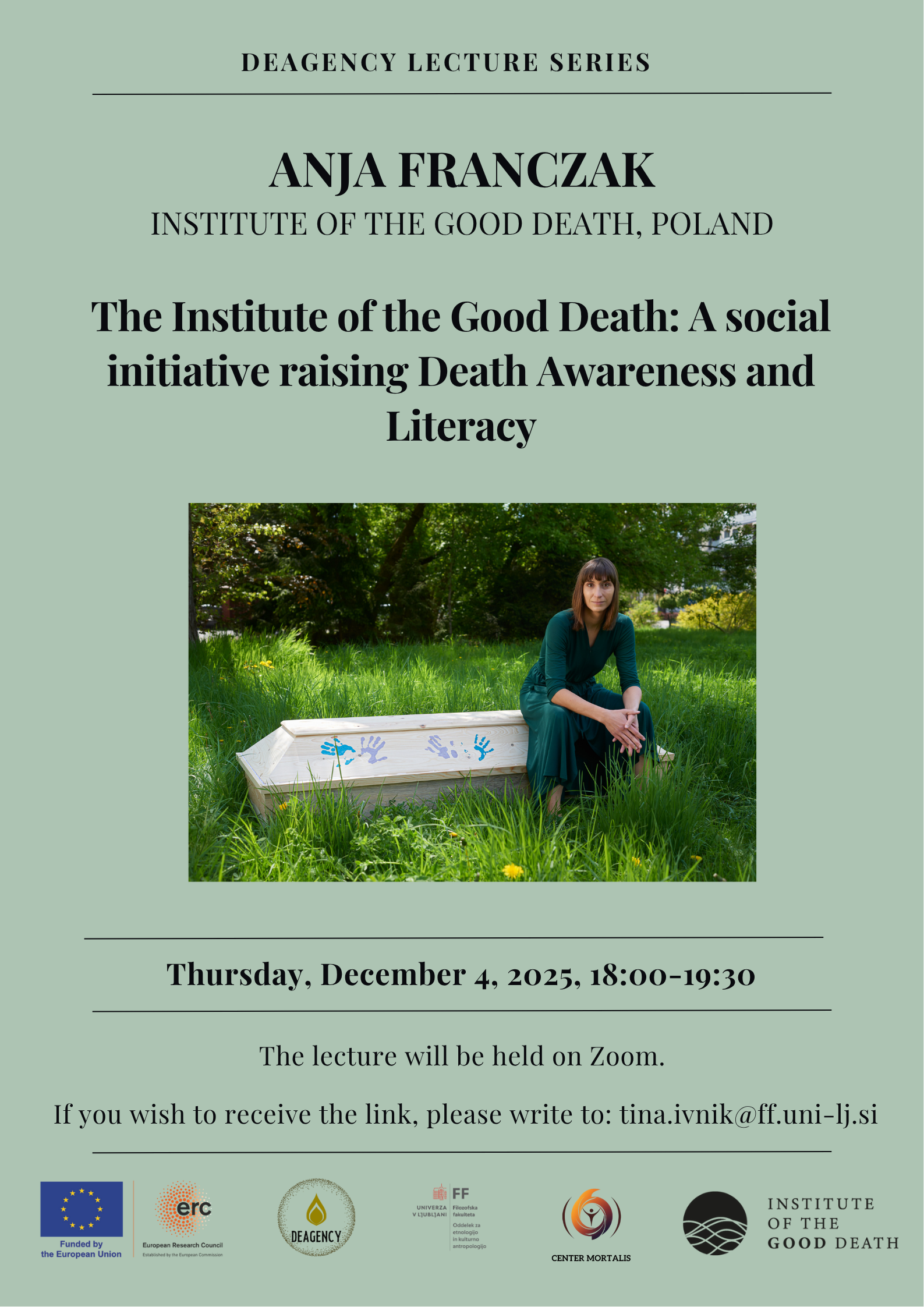
Anja Franczak
Institute of the Good Death, Poland
DEAGENCY Lecture Series 17:
The Institute of the Good Death: A social initiative raising Death Awareness and Literacy
December 4, 2025
Online Lecture

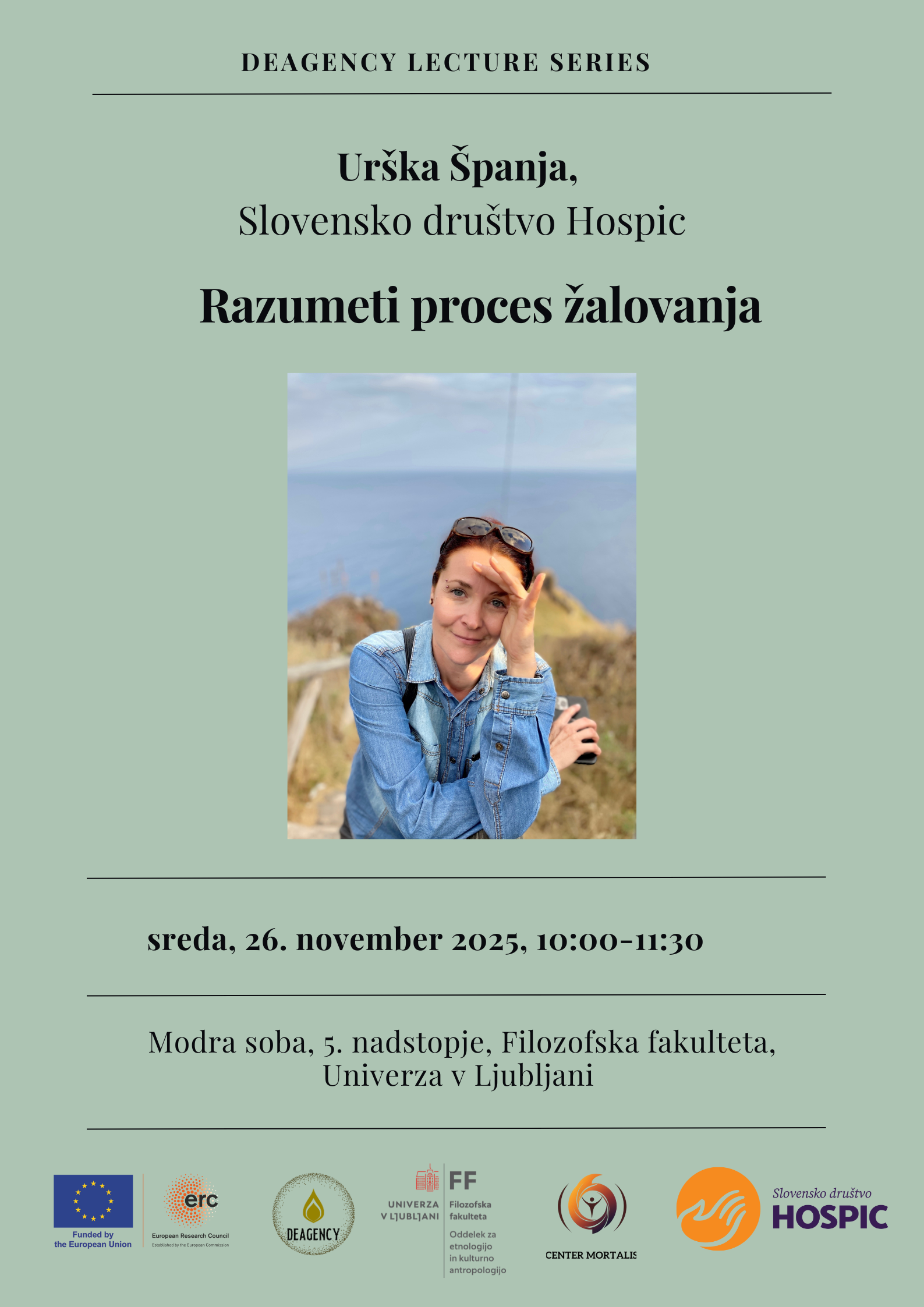
Urška Španja
Slovenian Hospice Society, Ljubljana, Slovenia
DEAGENCY Lecture Series 16:
Understanding Grief
26 November, 2025
Blue Room of the Faculty of Arts, University of Ljubljana
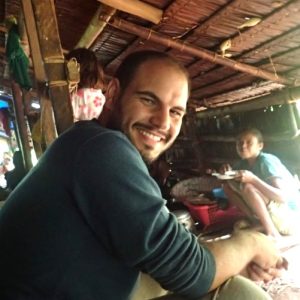
Giorgio Scalici, PhD
University of Palermo, Italy
DEAGENCY Lecture Series 15:
We are just asking for a room: religious discrimination and funerals in Italy.
October 2, 2025
Online lecture

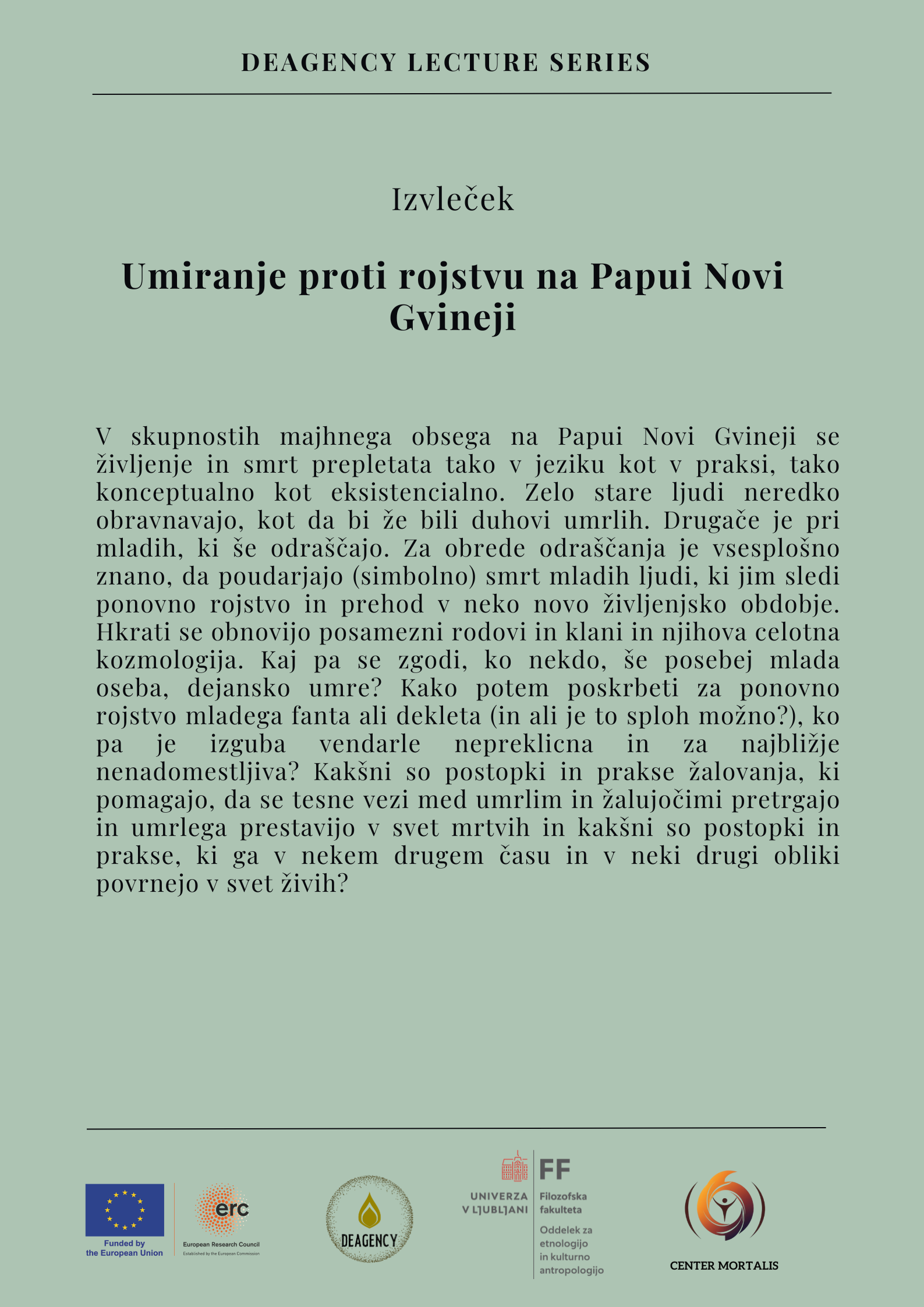
Borut Telban, PhD
Institute of Anthropologic and Spatial studies, ZRC SAZU, Ljubljana, Slovenia
DEAGENCY Lecture Series 14:
Dying Towards Birth in Papua New Guinea
May 19, 2025
Department of Ethnology and Cultural Anthropology, Zavetiška 5 , Lecture room P3, Ljubljana

Uršula Lipovec Čebron, PhD & Marijana Hameršak, PhD
Uršula Lipovec Čebron (Faculty of Arts, University of Ljubljana, Slovenia), Marijana Hameršak (Institute of Ethnology and Folkloristics, Zagreb, Croatia)
DEAGENCY Lecture Series 13:
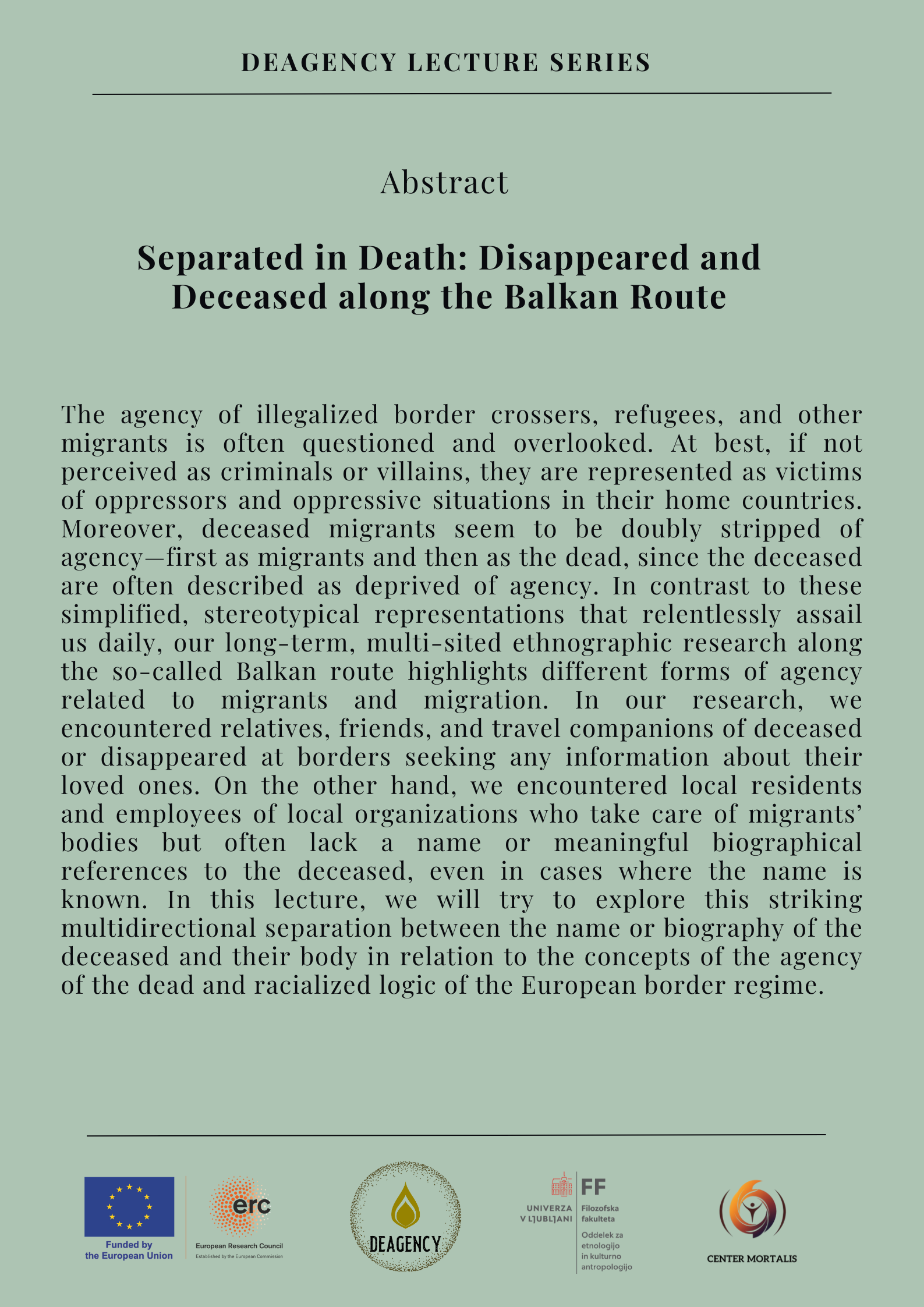
Separated in Death: Dissapeared and Deceased among the Balkan Route
May 8, 2025
Slovene Ethnographic Museum, Metelkova 2, Ljubljana, Slovenia
The lecture is part of a program of events at the Slovene Ethnographic Museum: Prehod.
Event PosterAbstractProgramme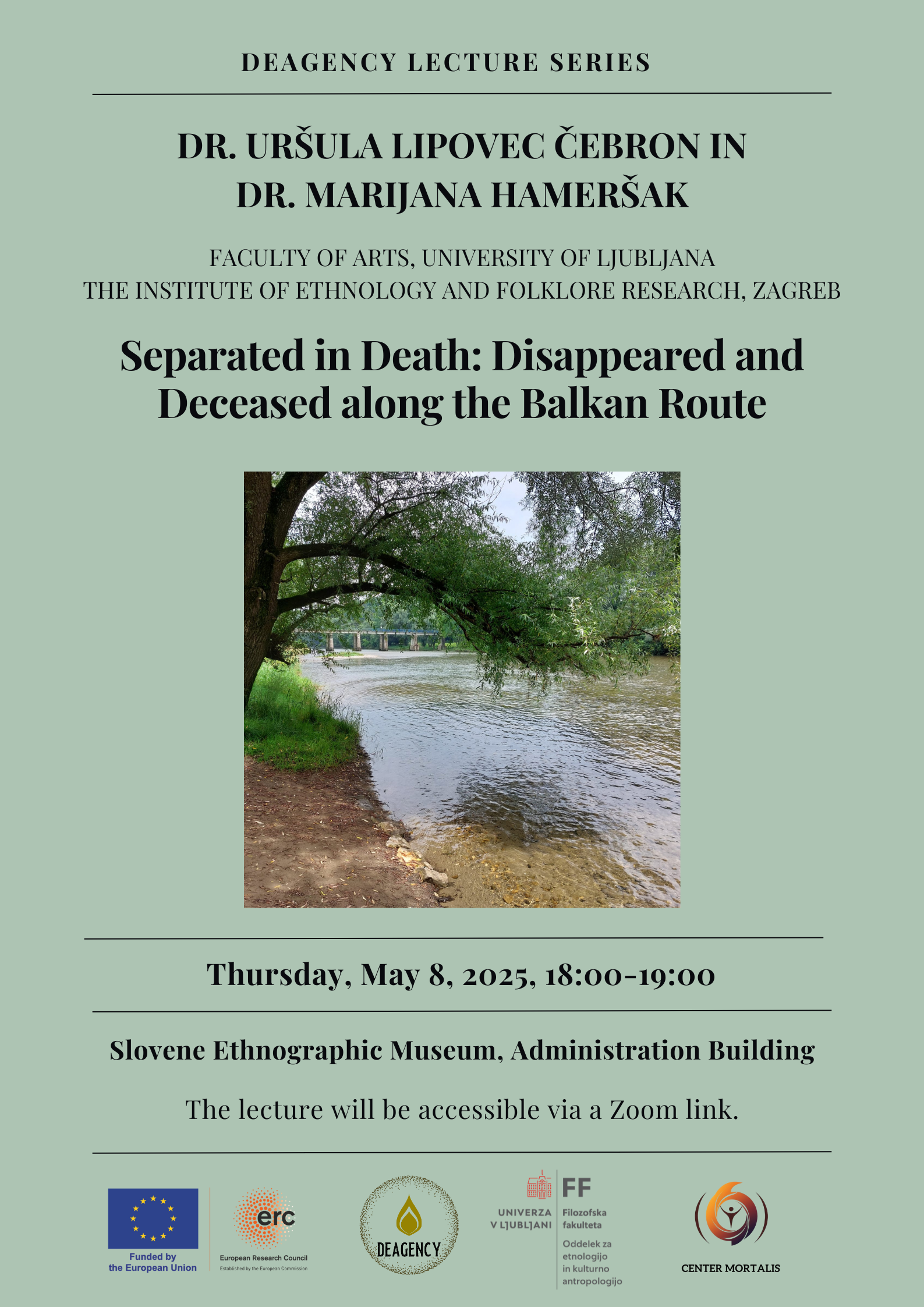
Prof. Janko Lozar Mrevlje, PhD
Faculty of Arts, University of Ljubljana, Slovenia
EAGENCY Lecture Series 12:
The Dying of Death as the European Cultural Legacy
April 14, 2025
Department of Ethnology and Cultural Anthropology, Zavetiška 5 , Lecture room P3, Ljubljana
Death and dying. It is indeed no wonder that the cultural endeavours of Europe in their entirety circle around this ultimate issue. And since ages ago, European culture, us Slovenians being no exception, has struggled to provide the answer to the question how to pull off a victory over death. It is also well known, again in the European context, that the spiritual roots of these metaphysical endeavours point in two main directions: one being Athens and the other Jerusalem. Ancient Greek Platonism and Judeo-Christian tradition, each in their own specific way, offer ample ideological resources as well as written sources for the human mortal – at least such is the ambition – to win this ultimate victory.
One of the most avid proponents of human finitude and mortality among the philosophers of the 20th century is Martin Heidegger, German phenomenologist, who set his acute mind to awaken metaphysically nurtured European human beings back to mortality. His basic phenomenological claim, stemming from the basic Husserlian motto “back to the things themselves”, was that if we are to come back to the immediacy of the things themselves, we are to fully embrace what is phenomenologically most evident: the human being’s finality, finitude, mortality, inescapable thrownness into time and history – as well as admit to the impossibility of escaping the clutches of time, the progresses and regresses of history, admit to the impossibility of escaping the finitude into ahistorical, extratemporal heavenly state of immortality and eternity.
This modern thanatology may sound fine and self-evident to us humans of the 21st century. However, the question remains, and this lecture will try to address this ellusive issue, as to why is it so difficult today to fully realize the post-metaphysically luxurious character of life; that this life (and Earth) is all we have got – and why is it so difficult to change our lives accordingly: how come we cannot and cannot simply bring to the fore the fragile beauty of it all in its transient magnificence?
Key words: death, Plato, Christ, Europe, Heidegger, metaphysics

Tamara Banjeglav, PhD
Institute of Culture and Memory Studies, ZRC SAZU, Ljubljana, Slovenia
DEAGENCY Lecture Series 11:
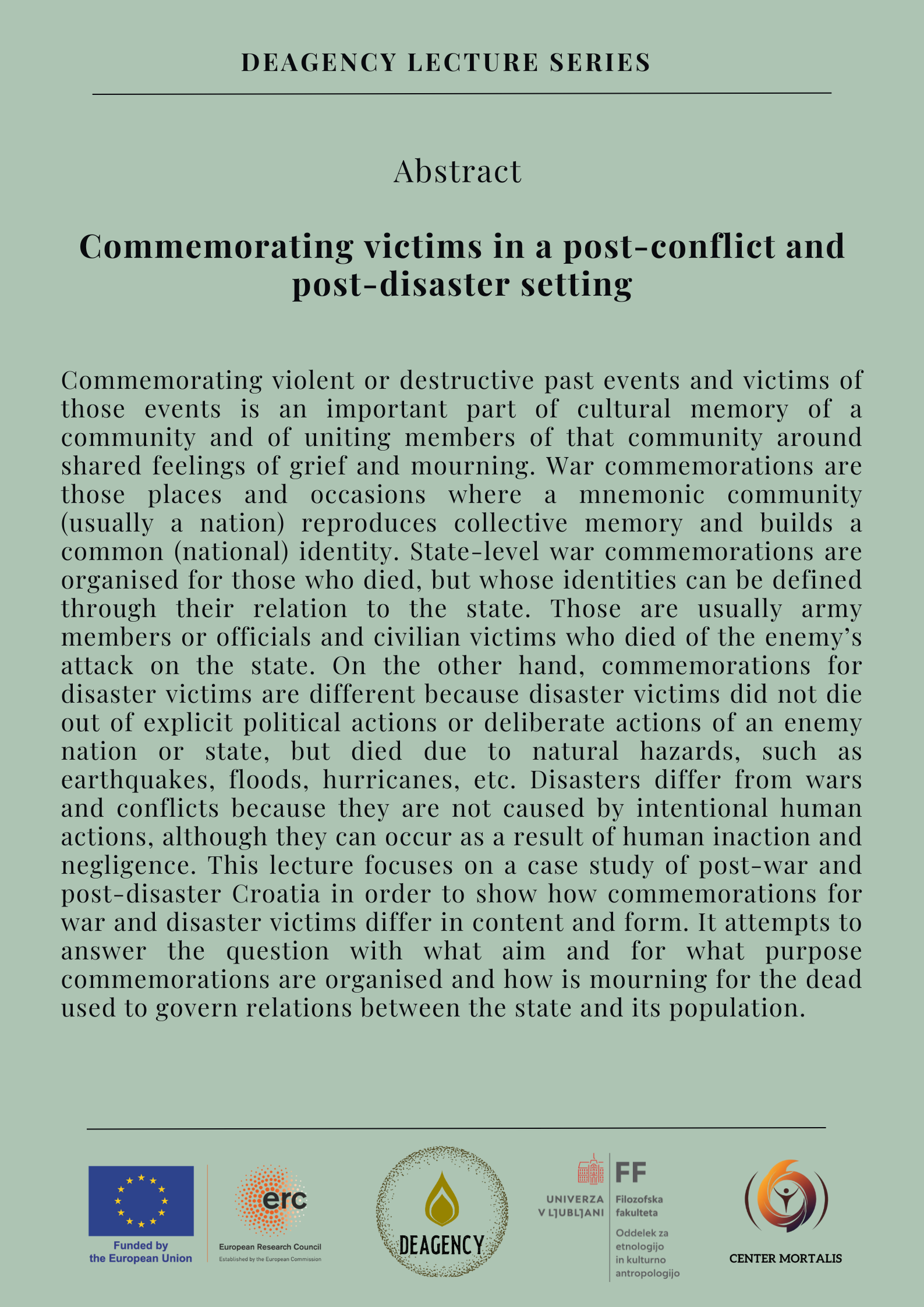
Commemorating victims in a post-conflict and post-disaster setting
March 31, 2025
Department of Ethnology and Cultural Anthropology, Zavetiška 5 , Lecture room P3, Ljubljana

Andrej Pleterski, PhD
Dddr. Pleterski holds three doctoral degrees — a PhD in History, Arheology and Ethnology. Institute of Archaeology, ZRC SAZU, Ljubljana, Slovenia
DEAGENCY Lecture Series 10:
When death becomes salvation
December 16, 2024
Department of Ethnology and Cultural Anthropology, Zavetiška 5 , Lecture room P3, Ljubljana
Razprava o uzakonitvi pravice do pomoči družbe pri prostovoljnem končanju življenja posameznika je v pomembnem delu razprava o spoštovanju in varstvu človekovega dostojanstva in enakega upoštevanja enakih interesov vseh ljudi. Zaradi enakega upoštevanja interesov je to tudi razprava o pravičnosti. Pravica do končanja lastnega življenja je v tej luči integralen del pravice vsake osebe, da avtonomno vodi svoje življenje v skladu s svojimi ideali in prepričanji, del katerih je tudi ocena o lastnem zdravju in stopnji dostojanstva, ki mu jo zdravje, ko to začenja pešati, še pušča. Zlasti pogosto je odločitev končati svoje življenje razumna ob bolezenskem izteku življenja, ko človeka pestijo neznosno trpljenje, pešanje moči in turobni obeti. Osebe, ki se znajdejo v takšnih okoliščinah in se odločijo končati svoje življenje, svojo odločitev le težko udejanijo brez pomoči drugih. Številni uzakonitvi takšne možnosti nasprotujejo. Kdo so in zakaj to počnejo?


Tiva Ivnik, PhD
ERC project DEAGENCY (No 101095729) at the Department of Ethnology and Cultural Anthropology, Faculty of Arts, University of Ljubljana, Slovenia
DEAGENCY Lecture Series 9:
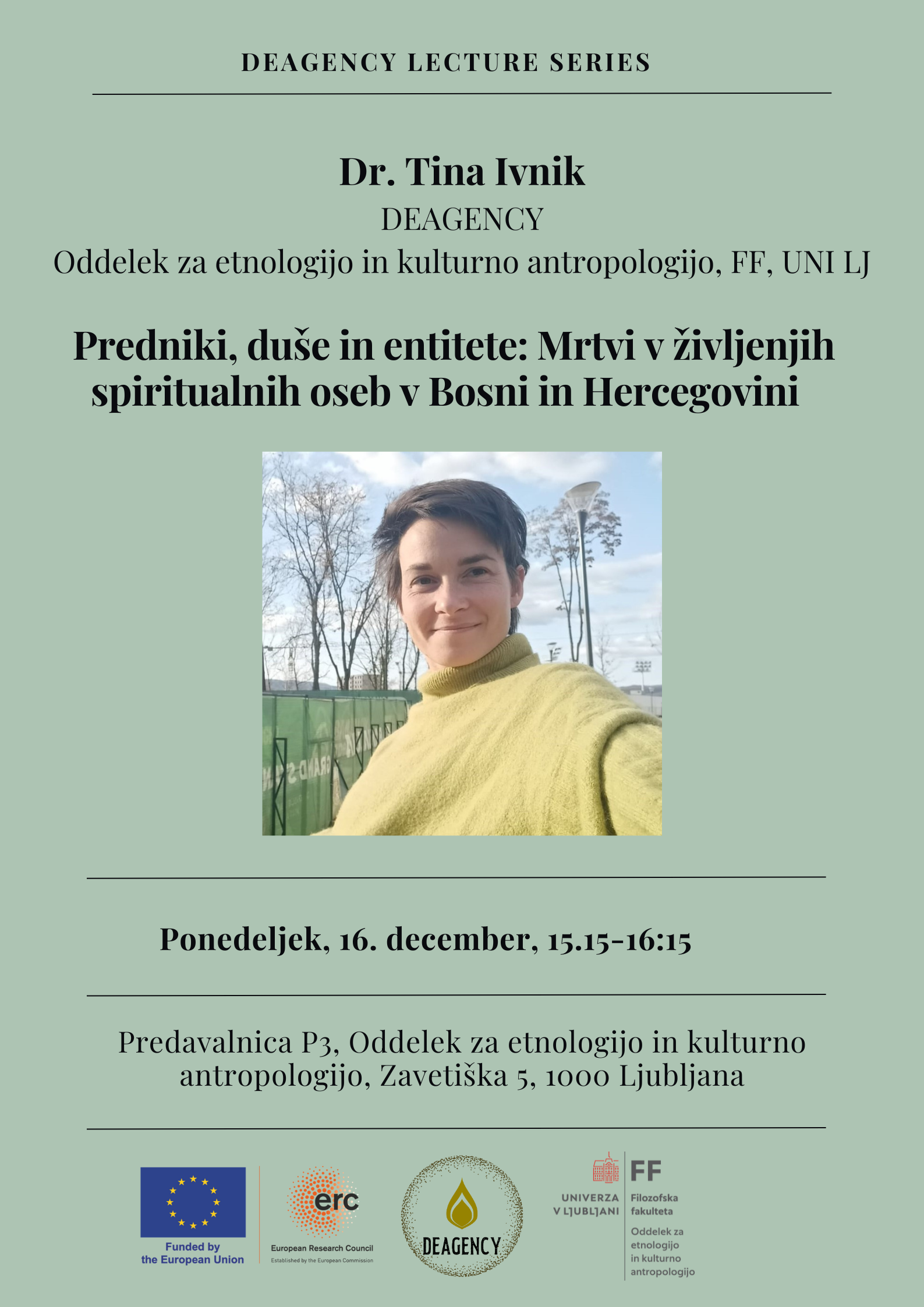
Ancestors, Souls, and Entities: The Dead in the Lives of Spiritual People in Bosnia and Herzegovina
December 16, 2024
Department of Ethnology and Cultural Anthropology, Zavetiška 5 , Lecture room P3, Ljubljana

Asist. Jelena Seferović, PhD
Institute of Contemporary History, Ljubljana, Slovenia and the Institute for Anthropological Research, Zagreb, Croatia
DEAGENCY Lecture Series 8:
“Upon this child, beasts have ripped its head”: Infanticide in the police narrative at the turn of the 19th to the 20th century
December 16, 2024
Department of Ethnology and Cultural Anthropology, Zavetiška 5 , Lecture room P3, Ljubljana
Police reports and records from crime scenes dating from the transition between the 19th and 20th centuries, concerning cases of infanticide, are characterized by diverse narrative styles that, despite apparent contradictions, collectively provide a complex depiction of the criminal act. On one hand, there is a style similar to fiction, featuring rich figurative language and dramatic elements. On the other hand, naturalistic descriptions include explicit and often brutal details about the condition and appearance of the dead infant's body, as well as the surroundings, ensuring a faithful representation of the harsh reality and gravity of the crime. These reports also reveal the social and familial dynamics of that era. Particularly interesting is the phenomenon of female solidarity that manifested through radical measures for preserving family honor and avoiding social stigmatization. In some cases, mothers-in-law acted as accomplices in the act of infanticide, supporting daughters-in-law who became pregnant through extramarital affairs. Psychiatric reports and documentation of women who committed or attempted to commit infanticide from the same historical period contain psychiatric observations providing insight into the intense internal conflicts faced by these women, such as feelings of guilt, shame, despair, and depressive symptoms. Although technical terms were used in these archival materials to describe various psychopathological conditions or emotional reactions induced by trauma or stress related to this crime, descriptive and naturalistic depictions of changes in the behavior and physical condition of women who attempted or committed infanticide were often used. The synthesis of near-fiction and naturalism in police reports from the transition between the 19th and 20th centuries allowed police officers, recorders, and the psychiatrists of the time to simultaneously enhance the drama of the crime itself while somehow mitigating its brutality through descriptive style.
Event Poster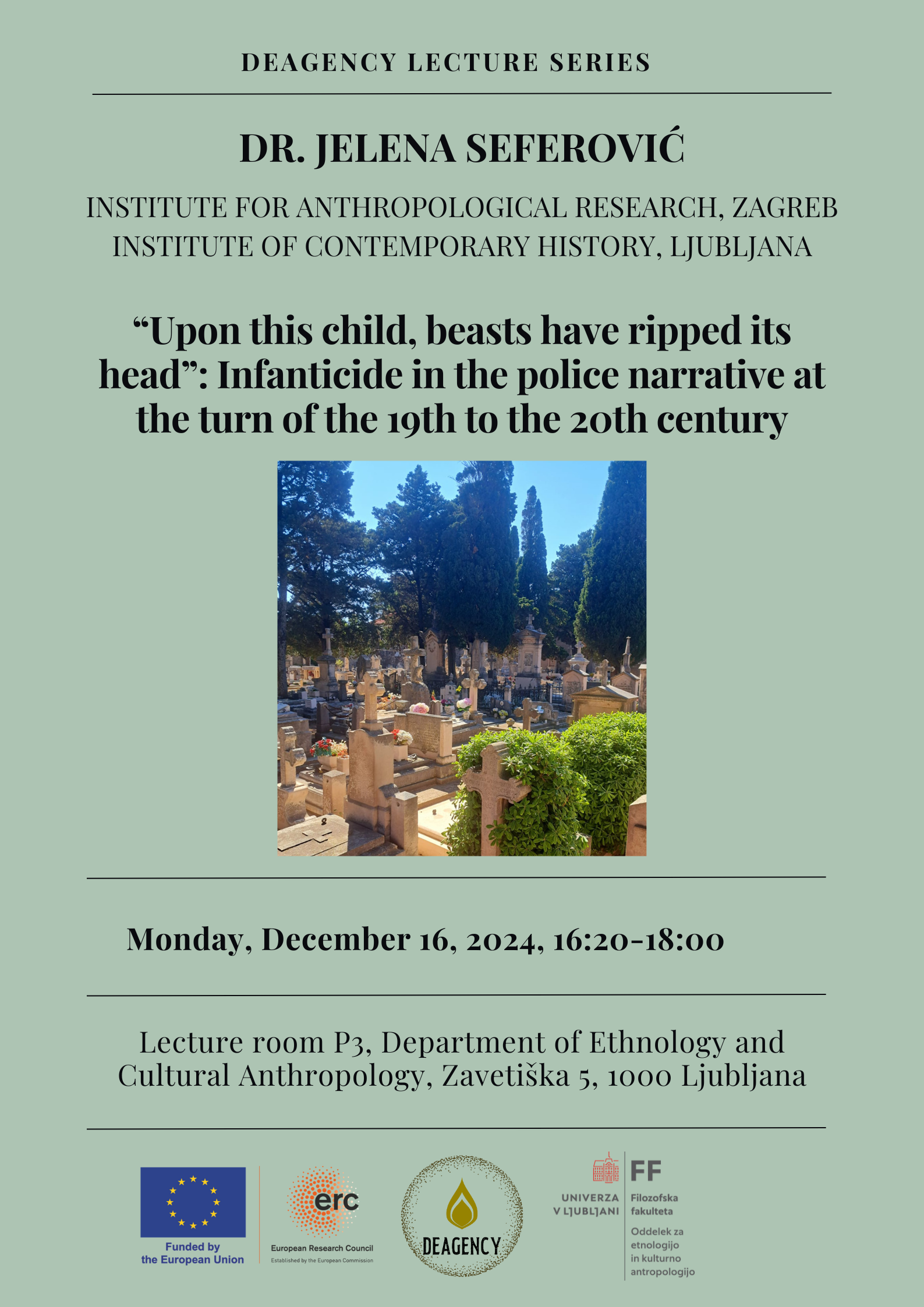
Asist. Martina Mravlja
Univerza na Primorskem, Inštitut Andrej Marušič, Slovenski center za raziskovanje samomora
DEAGENCY Lecture Series 7:
Dolgotrajna osamljenost med starejšimi po izgubah bližnjih oseb
November 11, 2024
Department of Ethnology and Cultural Anthropology, Zavetiška 5 , Lecture room P3, Ljubljana
Osamljenost je prepoznan javnozdravstveni problem, ki je povezan s številnimi neugodnimi izidi fizičnega in duševnega zdravja ter zgodnjo umrljivostjo. Predstavlja subjektiven občutek pomanjkanja socialnih odnosov, ki se lahko pojavi čeprav v soodvisnosti a hkrati tudi ne glede na obkroženost z ljudmi ali pogostost socialnih stikov. Iz preliminarnih ugotovitev naše raziskave o osamljenosti med starejšimi z uporabo narativnih intervjujev izhaja, da je osamljenost, ki se pojavlja v družbi drugih, izkušnja, ki od posameznika zahteva specifične strategije spopadanja. Razreševanje tega konfliktnega doživljanja, ki ga intuitivno navajajo starejše osebe kot osrednjo izkušnjo osamljenosti, je prežeta z družbeno pogojenimi pogajanji in zasebnimi zmožnostmi prilagajanja. V takšnih situacijah oddaljenost od drugih ni utemeljena v fizičnem smislu, kot je denimo v samoti, temveč z različnimi oblikami neenakosti, ki posegajo v identiteto posameznika. Izgube bližnjih zaradi smrti predstavljajo enega najpogostejših vzrokov za pojav dolgotrajnega občutka osamljenosti v katerem koli življenjskem obdobju. Vendar pa raziskave kažejo, da je osamljenost ne glede na pogoste izkušnje izgub v poznem življenjskem obdobju, bistveno odvisna predvsem od kulturnega konteksta. V iskanju kulturno-specifičnih intervencij za zmanjševanje osamljenosti je zato pomembno razumeti kulturni kontekst, ki ob življenjsko pomembnih dogodkih, kot je smrt bližnjih, varuje pred dolgotrajnimi občutki osamljenosti.
Event Poster
Mišo Kapetanović, PhD
Institute for Habsburg and Balkan Studies at the Austrian Academy of Sciences, Vienna, Austria
DEAGENCY Lecture Series 6:
The Death of Hamam: Decoupling of Homosociality and Homosexuality in the Post-Ottoman Balkans
October 28, 2024
Department of Ethnology and Cultural Anthropology, Zavetiška 5 , Lecture room P3, Ljubljana
The Balkan hamams, brought by the Turkish Empire, established a setting for social interaction in the Eastern Mediterranean where individuals of the same gender could bathe, receive massages, engage in physical contact, unwind, and engage in conversation. Some of patrons used the space to engage in sexual intercourse discreetly. Westerners were both shocked and amused by this behavior, which they portrayed in Orientalist literature and art. With the emergence of the Habsburgs, Yugoslav kingdom, and communist nation states, the hamams ceased to exist in public life in the western lands of the Empire. This paper investigates the degree to which the implementation of contemporary hygiene systems played a role in this vanishing, as well as its connection with the growing social disapproval of homosexuality. The study focuses specifically on investigating the rumors and folklore associated with hamams, in order to examine the shifts in gender regimes.
Event Poster
Sanja Lončar, PhD
Department of Ethnology and Cultural Anthropology
DEAGENCY Lecture Series 5:
Demographic, spatial and socio-cultural changes in rural regions
November 1, 2024
Department of Ethnology and Cultural Anthropology, Zavetiška 5 , Lecture room P3, Ljubljana
Event Poster
Tanja Petrović, PhD
Institute of Culture and Memory Studies, ZRC SAZU, Ljubljana, Slovenia
DEAGENCY Lecture Series 4:
What is left of post-socialism? A view from the Balkan periphery
December 18, 2023
Department of Ethnology and Cultural Anthropology, Zavetiška 5 , Lecture room P3, Ljubljana
More than three decades after the demise of state socialism, the question arises to what extent the concept of post-socialism still makes sense given the diversity of economic, political and everyday conditions that characterise the former state socialist societies in Europe and whether we are already living in a time »after post-socialism«.
Mare Kõiva, PhD
Estonian Literary Museum, Tartu, Estonia
DEAGENCY Lecture Series 3:
Communication with the dead: Dream worlds
November 14, 2023
Department of Ethnology and Cultural Anthropology, Zavetiška 5 , Lecture room P3, Ljubljana
Event Poster
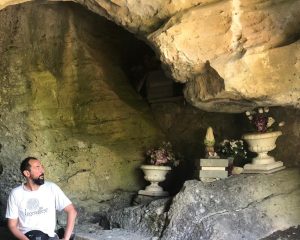
Luka Šešo, PhD
Department of Socilogy, Catholic University of Croatia, Zagreb, Croatia
DEAGENCY Lecture Series 2:
Narrating about the (un)dead: Croatian case studies
November 27, 2023
Department of Ethnology and Cultural Anthropology, Zavetiška 5 , Lecture room P3, Ljubljana
Event Poster
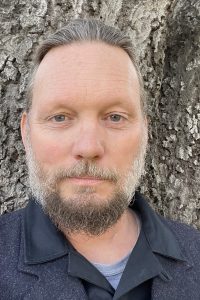
Tok Thompson, PhD
University of South California, USA
DEAGENCY Lecture Series 1:
Information Technologies and the Afterlife
October 17, 2023
Department of Ethnology and Cultural Anthropology, Zavetiška 5 , Lecture room P3, Ljubljana
Event Poster